Skip to content

PotD 20260118

Tagged

PotD 20260110

Tagged

PotD 20260109

Tagged

PotD 20260108

Tagged

PotD 20260107

Tagged

PotD 20260106

Tagged

PotD 20260105

Tagged

PotD 20260104

Tagged

PotD 20260103

Tagged

PotD 20260102

Tagged

PotD 20260101

Tagged

Fast-fish

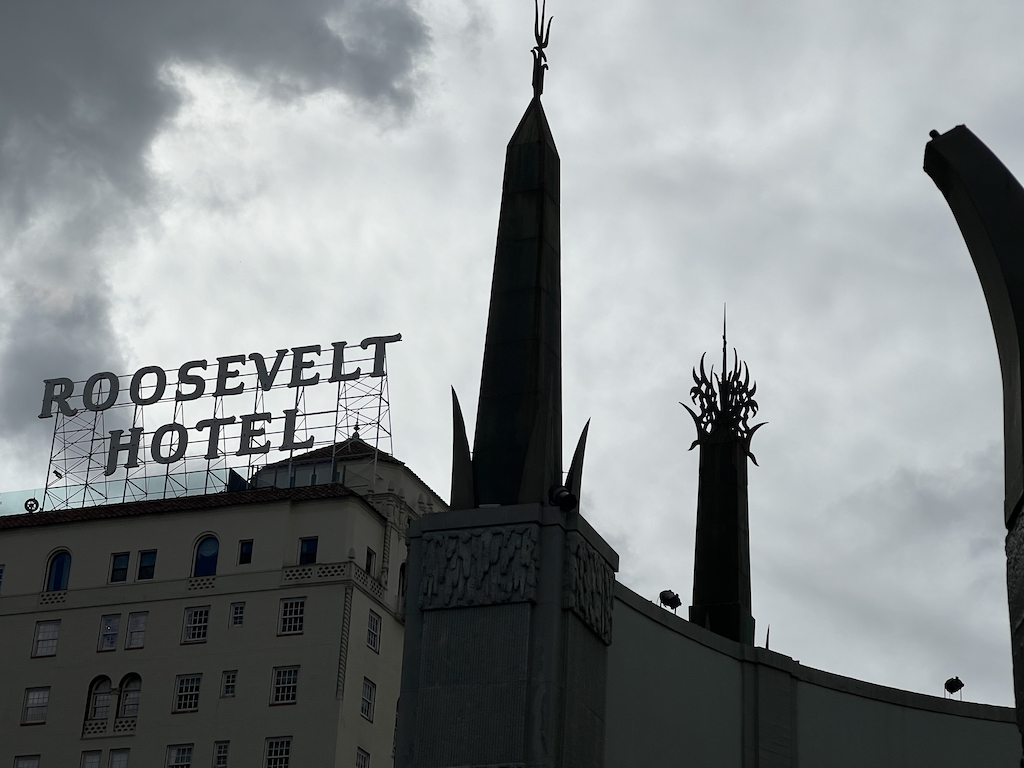
I just watched the 50th anniversary showing of Jaws in IMAX at the Chinese in Hollywood, which was great. Spielberg before he completely gave into the saccharine emotional button-pushing of his later films.

I only just twigged to the Moby-Dick allegory on this viewing, for one specific reason; enlightenment hit me upside the head with a marlinspike. In defense of my ignorance, I saw Jaws when it came out, and possibly again at the 25th anniversary. Long before I started reading Moby-Dick at least once a year for the past two decades. I was a teenager the first time, and a newly minted experimental physicist with my mind on other things the second time.

Maybe I had read M-D once when I saw Jaws, as an adolescent, and like most great books I read dutifully then, most of the joy and meaning only came later.

The marlinspike-to-the-head came late in the movie, when the crew of the Orca have managed to attach two buoys to Bruce the shark, and are running full-steam ahead with the wind (the smoke is blowing forward faster than the boat is moving) behind the sounding shark.

Hooper mutters “fast-fish” to himself with bared-teeth, and it all fell into to place.


fast-fish

“Fast-fish”


My mind leapt. The movie reframed itself in an instant. My head swum.

I am sure that I did not catch that in any previous viewing, and I can’t find any reference to it in any of the articles comparing Jaws to Moby-Dick [1]. Plenty of analysis, meta-analysis, deconstruction, close-reading, and navel gazing, but no one calls out that Hooper, a rich, well-educated kid, is explicitly referencing a chapter in Moby-Dick. Spielberg and Gilbert (and Bentley, and one of the numerous other screenwriters) all certainly knew what they were doing.

I’m guessing that the entire audience, in 2025, when they chuckled at that line, were thinking that he was just saying that the shark was fast. Which is what the movie had been building up to, for one of the turning points where Ahab Quint is harpooning the whale shark, and it looks like the Pequod Orca might succeed.

Maybe everyone else knows this. But I’ve never seen it written down before. Let me display my ignorance; worth it for a small ration of enlightenment.

“AND I ONLY AM ESCAPED ALONE TO TELL THEE”
–Job

The drama’s done. Why then here does any one step forth?


[1] Of course, search sucks now, so this is probably just another AI slop failure rather than the collective minds of the whole universe not having read Moby-Dick and understanding what ‘fast-fish’ was referencing at any time in the last fifty years. This is about me finally getting it.

Tagged

PotD 20250705

Tagged

PotD 20250519

Tagged

A complete unknown lisan al gaib

I was listening to a podcast review of one of my airplane movies (now purchased and rewatched [0]), A Complete Unknown. The reviewers’ comment was that they got tired of the music biopic trope of others looking at the rising star with adoring eyes, and it’s true, ACU does that a lot.

I noticed it too – it’s really obvious. It could be them fully leaning into the trope, because tropes are tropes because they work, but I think it’s meant to be a subversion of the trope.

Watch Timothee Chalamet in those scenes, and Dylan in Don’t Look Back, and see how that adoration reflects in his/their face, and consider what it must have been like for Dylan then, and for Chalamet in real life now, with the fame [1] descending upon someone self-aware and bright who can see what’s coming, and what that might do, given their naturally cynical bent. Then think about the other movie Chalamet has starred in, and his role in that, and a scene explicitly calling out [2] the moment a friend becomes a disciple.

There, I made a connection between Dune and Bob Dylan. Both of whom arrived at roughly the same time.

It’s definitely a trope, probably for a reason, and well mocked in the music mockumentary genre. I think the director and the star both knew that, and considered the well-deserved skewering these kind of movies have gotten, but this isn’t La Bamba, and it’s not about the adoration, it’s about watching Dylan/Chalamet and seeing that funhouse mirror reflection of what just happened, and what’s about to happen, in their faces, and how it got to Johnny Cash just a moment before.

I don’t think I’ve seen that in a movie before, and that was really well done.


[0] I wish I had made time to watch it in an IMAX theatre. It was pretty good on my home setup, way better with good sound than on the airplane.
[1] it’s even called out in the letters to Johnny Cash in the movie, how obvious do they have to make it?
[1] in the movie and the book

Tagged